By Jordan Drebin, WFC Steering Committee member
As wildfires continue to reshape landscapes and communities, the need for collective solutions has never been more urgent. At the Adapting Together workshop hosted by Oregon State University, the Fire Adapted Communities Network, and the Northwest Fire Science Consortium, I joined scientists, nonprofit partners, students, and policymakers to explore what it means to coexist with fire.
Walking into the main conference room on the first day, I was hit with an undeniable wave of buzzy optimism, and as I took in the room, I realized most of the attendees were women. Then I studied the program and saw that the keynote speaker, many of the session leaders, and even the team behind the workshop itself were all women. I found myself thinking,
This… is the fire in women.
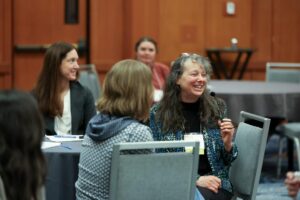
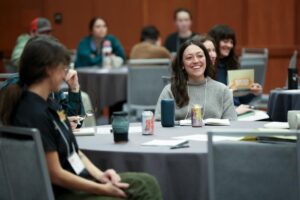
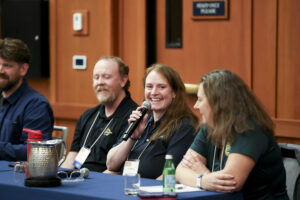
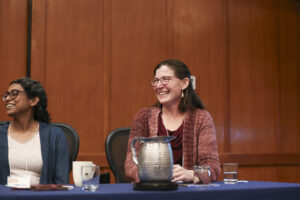
Photo Credit: Amanda Loman, © Oregon State University Extension, at the Adapting Together: Shaping the Future of Fire in the Northwest workshop hosted by Oregon State University Extension and the Fire Adapted Communities Network in March 2026.
Over the course of three days, that presence revealed itself not just in who was in the room, but in how the space was held. The workshop was thoughtfully designed, balancing technical depth with emotional intelligence, structure with flexibility. It reflected a kind of leadership that values not only knowledge-sharing, but relationship-building; not only outcomes, but process.
Throughout the fluid schedule of breakouts and activities, there was something for everyone, regardless of background or experience level. The sessions were a thoughtful mix of content and connection, where the diverse range of participants left with new ideas, perspectives, and, like me, new friends.
What stayed with me most, though, were the individual women I met along the way, each carrying her own story, her own reason for showing up, and her own vision for change. This is a glimpse into a few of those women whom I find particularly inspiring in their passion for change, for their drive in the midst of challenge, and their unique being.
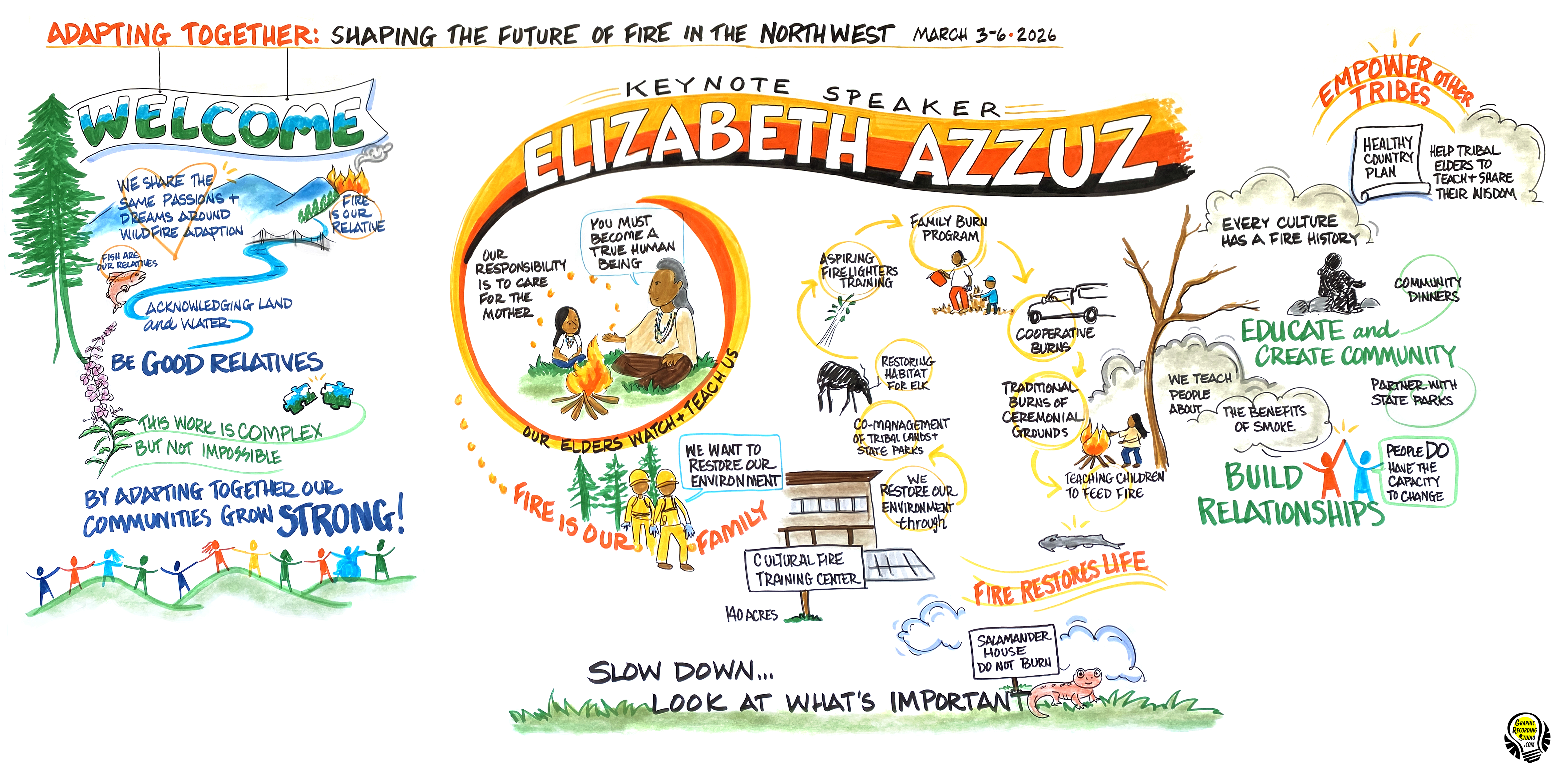
This mural was created onsite by Alece Birnbach, graphicrecordingstudio.com, at the Adapting Together: Shaping the Future of Fire in the Northwest workshop hosted by Oregon State University Extension and the Fire Adapted Communities Network in March 2026.
Elizabeth Azzuz
Liz speaks not just from the heart, but from a perspective before our time to “walk back into the comfort of fire.” Reminding us that if you go back far enough, we all have ancestry that had a relationship with fire. As the keynote speaker, she illustrated that fire is medicine not only to the land, but to the soul. The path to live in right relationship with our lands, ancestry, ourselves, and each other.
Liz has been burning since the age of four, when her grandfather caught her playing with matches and taught her about her responsibility to the mother earth. She is a Yurok Tribal member from the village of Weitchpec in northern CA and a Karuk descendant from Katamiin.
She is the director of traditional fire, family burns, and treasurer for the board of the Cultural Fire Management Council, a women-led cultural fire training in practice for 13 years. They operate training exchanges to train future firelighters in prescribed and cultural burns, giving them the needed skills to work with fire safely. She is also treasurer to the Indigenous Stewardship Network and a member of the Indigenous Peoples’ Burning Network with The Nature Conservancy.
Googling Elizabeth Azzuz, which I highly suggest, will produce a lifetime of work restoring cultural fire in tribal territories and across the world. Her work reminds us that returning to fire is not about rediscovery, but about rekindling relationships with land, culture, and community.
Robynn Coulter
I was lucky to have picked the seat next to Robynn during a breakout session titled Adaptive Capacity for Community Wildfire Adaptation. This was one of those moments that feels incidental at first, but ends up being quietly meaningful. Robynn, a retired business analyst and landowner from Chelan, Washington, didn’t come to the workshop with a professional background in forestry or fire management. She came with a genuine desire to understand how she could contribute to the well-being of her community and landscape.
I was inspired by her commitment and creative perspective, translating the speaker’s messaging into something tangible and local. There was something deeply inspiring about her presence, a reminder that meaningful change doesn’t always begin with expertise, but with attention, humility, and a commitment to show up.
Robynn embodied leadership rooted in community, adaptability, and the belief that each of us has a role to play in shaping more resilient landscapes.
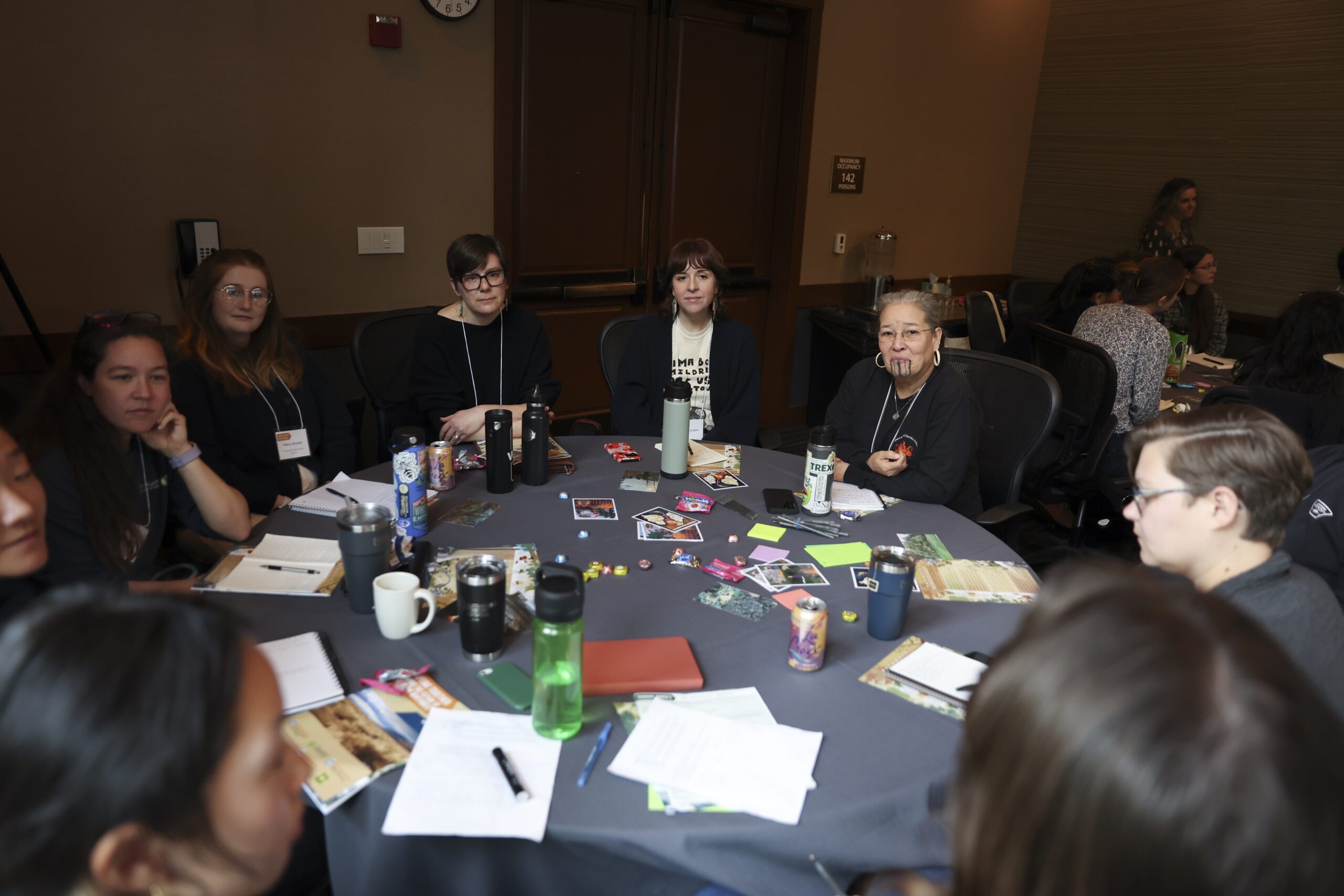
Photo Credit: Amanda Loman, © Oregon State University Extension, at the Adapting Together: Shaping the Future of Fire in the Northwest workshop hosted by Oregon State University Extension and the Fire Adapted Communities Network in March 2026.
Jessica Angel
During the breakout session, Voices from the Ground: The Role of Workers in Adaptive and Inclusive Decision Making, Jessica shared her refreshingly honest and necessary perspective as an Indigenous woman and cultural fire practitioner.
She spoke candidly about the challenges of making fire work a truly healthy and sustainable career, particularly for those whose identities and histories have been marginalized within it. Her message stayed with me: we cannot eliminate the exploitation of land until we eliminate the exploitation of people. It was a powerful reminder that ecological restoration and social justice are not separate efforts; they are deeply intertwined, and one cannot succeed without the other.
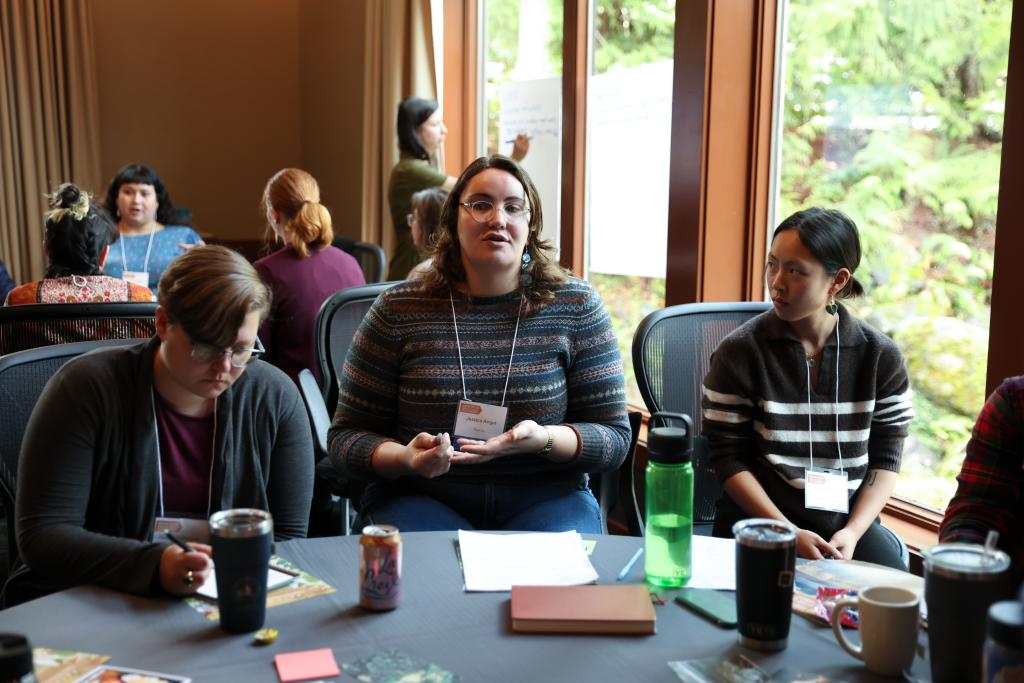
Photo Credit: Amanda Loman, © Oregon State University Extension, at the Adapting Together: Shaping the Future of Fire in the Northwest workshop hosted by Oregon State University Extension and the Fire Adapted Communities Network in March 2026.
At the workshop, Jessica represented FireGeneration Collaborative – a native-run organization serving communities by empowering Indigenous leadership and diverse young generations for a fire-resilient future. She is an enrolled member of the Chinook Indian Nation from the mouth of the Columbia River and is a member of the all-Indigenous cultural burn crew, the wagon burners. Her focus is to empower Indigenous women in reclaiming their cultural burn practices in a predominantly white, male, and heterosexual field. She has been part of successful efforts to return fire to her own nation, as well as several others in Washington state, after almost 200 years of settler-colonial fire suppression.
What I loved about Jessica’s perspective is that it asks us to confront history, to listen deeply, and to imagine a future where both people and landscapes can heal together.
As the workshop came to a close, what lingered was a shared sense of responsibility and possibility.
Again and again, the importance of investing in youth and early-career practitioners surfaced not just as a workforce need, but as a cultural one. Trainings, workshops, and hands-on learning spaces are more than skill-building opportunities; they are entry points into a broader fire culture rooted in collaboration, respect, and care. When young people are invested in, mentored, and empowered, they don’t just inherit this work; they evolve it.
And perhaps what gave me the most hope was meeting the women leading this evolution.
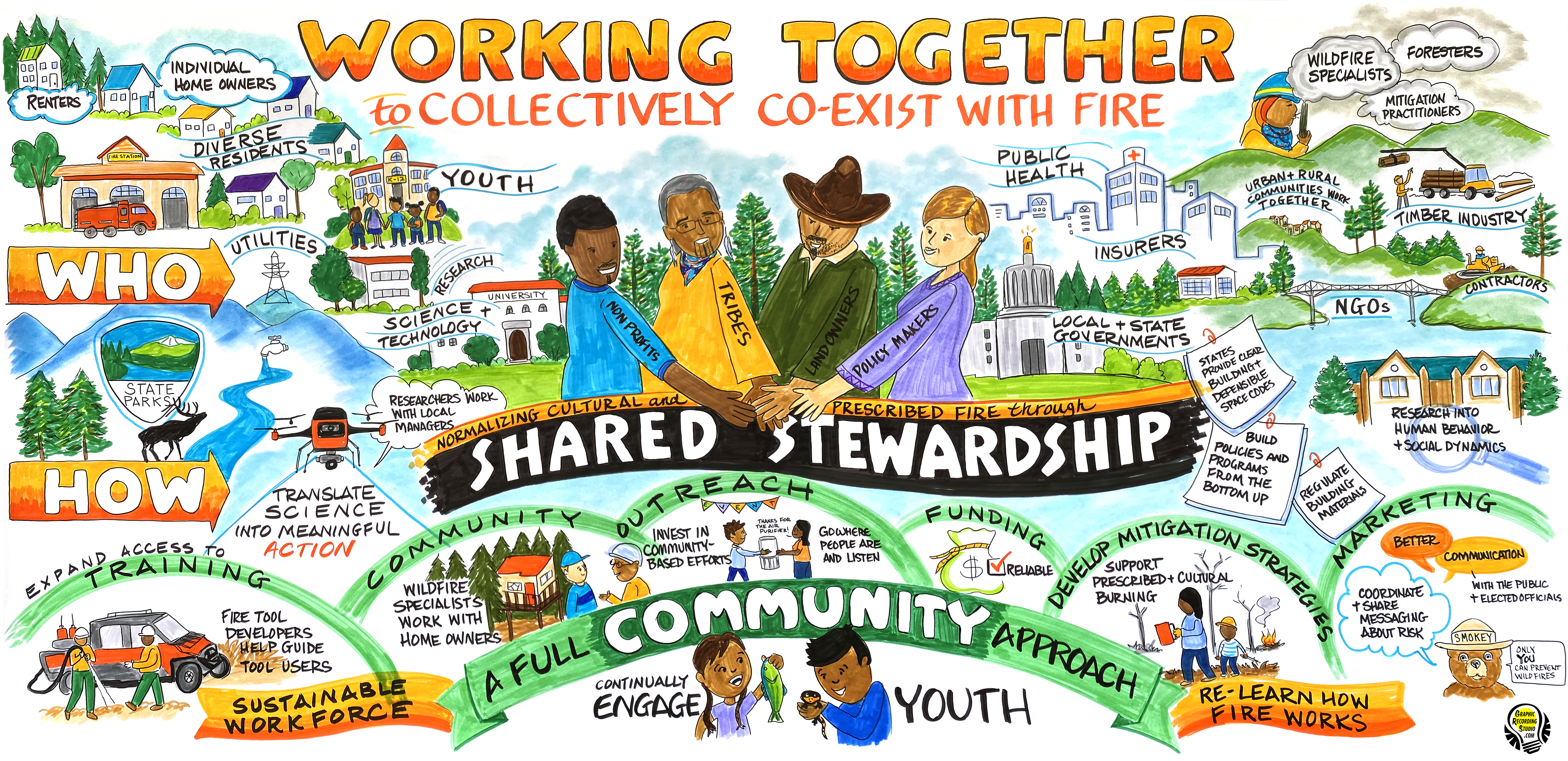
This mural was created onsite by Alece Birnbach, graphicrecordingstudio.com, at the Adapting Together: Shaping the Future of Fire in the Northwest workshop hosted by Oregon State University Extension and the Fire Adapted Communities Network in March 2026.
The women at this workshop are not only contributing to fire adaptation, but also expanding what it means to work in fire: centering community, elevating underrepresented voices, and weaving together ecological knowledge with social responsibility.
They are building a culture where learning is shared, and the future of fire is something created together.
If there is one takeaway I carry forward, it is this: the future of fire will be shaped by those willing to show up, to learn, and to lead differently. And in rooms like this filled with emerging leaders, grounded practitioners, and women driving change, that future feels within reach.